The evacuation was chaotic, with almost everyone having to evacuate on their own. Many were forced to stay because they had no external assistance, feared the uncertainty, or had family members who were ill. The majority of evacuees consisted of Soviet officials, as they were provided with transportation before anyone else.
“Mizoch, too, wasgripped by panic and worry. Government officials and people close to them hadalready left the area and fled to Russia. Many Jews wanted to follow them butwere not allowed to do so. Only on the fifth day of the war the borders werelifted, and it became possible to leave the area”.
Nahum Kopyt, a Jewfrom Mizoch, was 34 years old at the start of the Nazi occupation
The persecution of the Jewish population began almost immediately after the area was occupied. In the first weeks of July 1941, documented attacks against Jews occurred in more than 42 villages and towns of Western Volhynia. They were initiated by bothGerman soldiers and the local population. Most of the attacks were limited to looting and beatings, though in some cases there were casualties. The biggest number of Jewish people, 130, were killed in Kremenets.
“Everyone thought: theGermans had behaved quite humanely during the previous war and would do thesame now. No one could believe that they would treat people like they did”.
Leia Rog, a Jewfrom Melnytsia, was 13 years old at the start of the Nazi occupation.
In addition, Jews were forbidden from performing religious rites in public, only allowed to go to the market during specific hours, and dispossessed of objects made of precious metals. Most importantly, they were forced to wear Star of David armbands so that they could be easily identified among the local population.
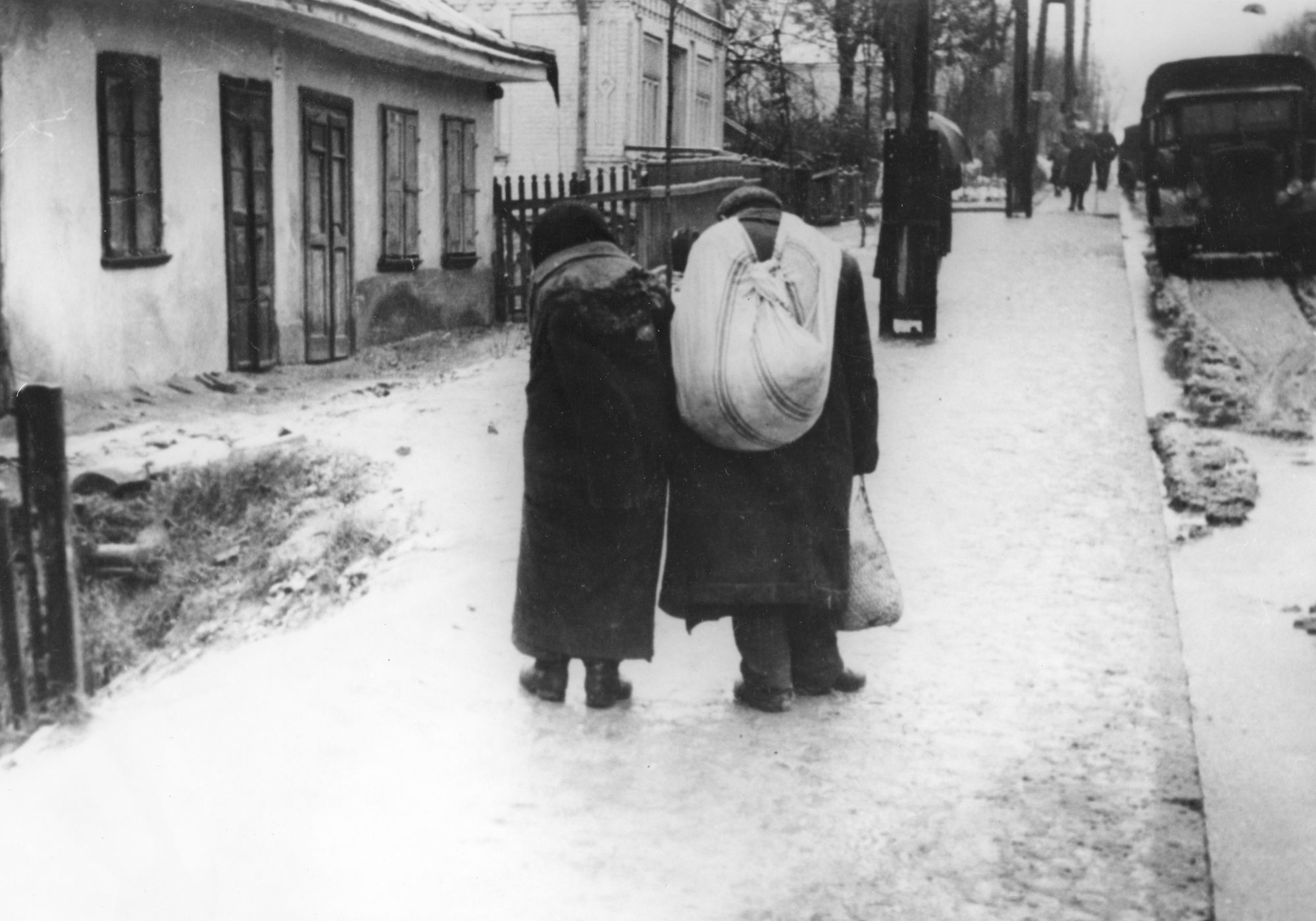
Before the massmurder of Rivne Jews in the Sosonky area. Source: Bundesarchiv
Initially under the military and later, from September 1941, under the civilian occupation authorities, violence against Jews became even more massive and systematic. Persons suspected of being “Soviet activists” were also targeted.Soviet prisoners of war comprised another category of victims. Ethnic Jews among them were separated from the rest and killed. Other POWs were left to die of starvation, infectious diseases, and unbearable conditions. The total number of Jewish victims of the first wave of shootings in Western Volhynia amounted to over 37,000 people. The executions were primarily carried out by Einsatzgruppe S units and mobile police battalions. The largest mass murders occurred on June 27 and July 2 in Lutsk (1460 Jews killed); on August 4and September 2 in Ostroh (over 3500 Jews killed); on November 6–7 in the Sosonky area in Rivne (17500 Jews killed); on November 10 in Kostopil (1400 Jews killed).
– You were forced to walk 4 kilometres. How did the convoy behave, what did they do?
– They drove us forward, beat us with whips: “Move faster!” The weather was very bad. They got exhausted themselves; they were wet, because it was snowing and raining. I can’t describe how awful the weather was, we had never had such weather before. Once there, they ran out of bullets. They hadn’t expected so many [victims]. That’s why we were able to escape.
– Did they order people to undress before killing them?
– Those who were dressed well had to strip naked; those who were poorly dressed were thrown in as they were …
– Who did the shooting?
– Germans.
Mariia Berenzon, a Jewfrom Rivne,
survived the mass murder in the Sosonky area at the age of 23
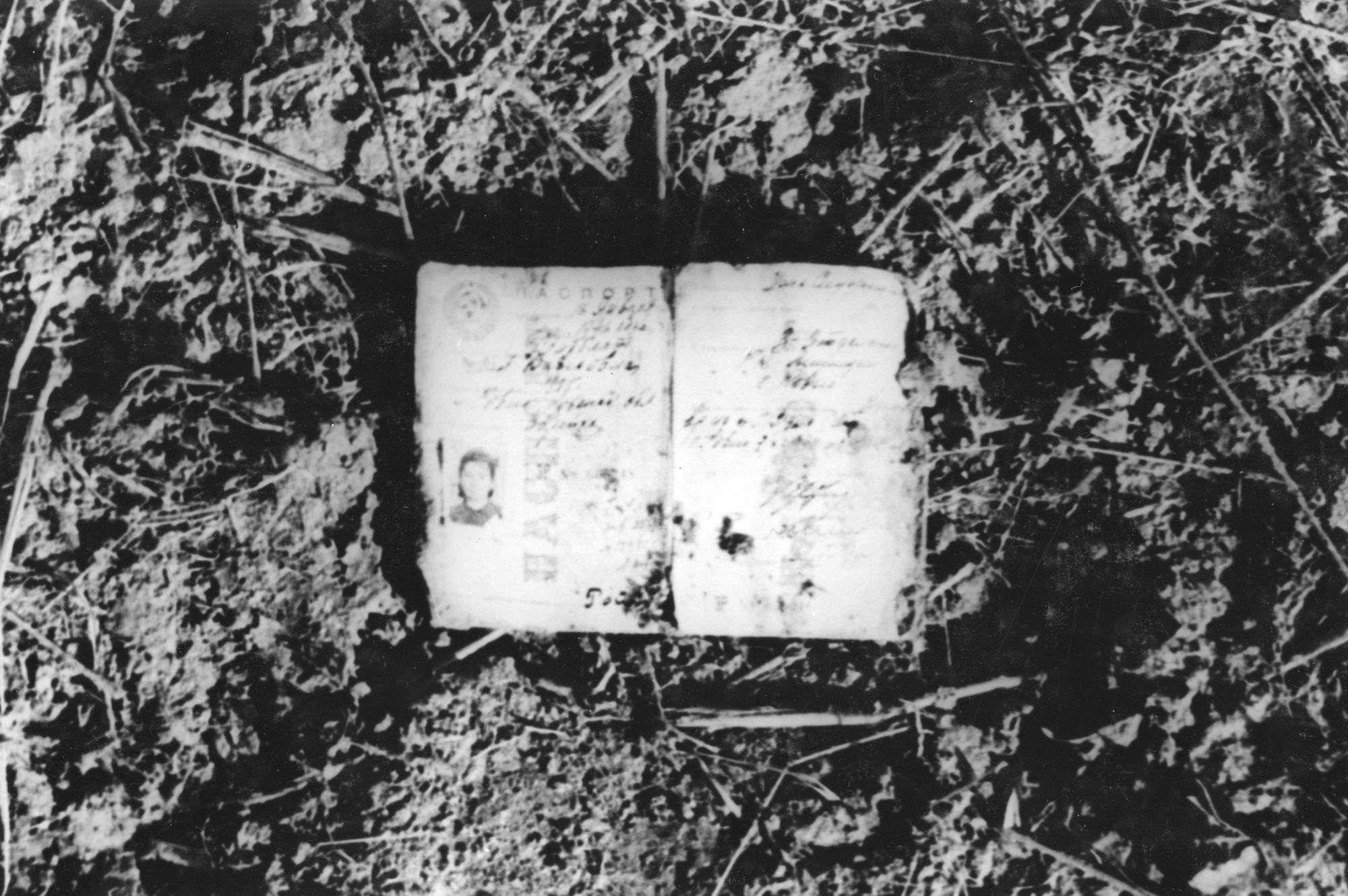
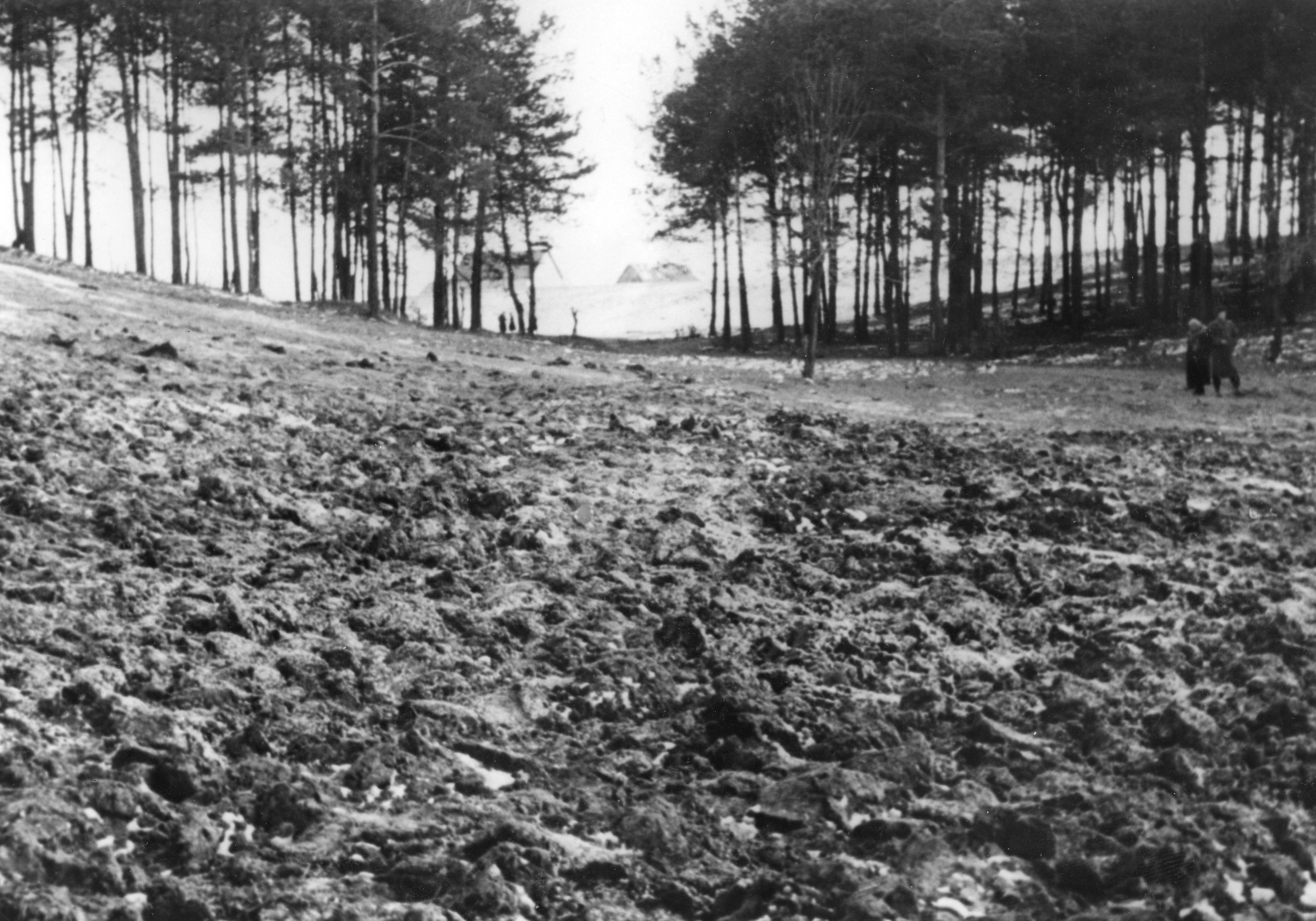
After the mass murderof Rivne Jews in the Sosonky area. Source: Bundesarchiv
The occupation authorities did not consist of many people. Therefore, especially as far as the persecution of Jews was concerned, they relied on local collaborators in administrative and police structures. Set up at the beginning of the occupation, these bodies mostly employed ethnic Ukrainians during the period in question, although their ranks also included Poles, Czechs, Russians, and people of German origin, the so-called Volksdeutsche.
All these measures introduced by the German authorities created an atmosphere of fear, despair, total distrust, mutual hostility, and the desire to survive at any cost. To a degree, they also normalized violence and the desire to profit from the desperate situation of others. Later, this had an impact on people’s actions and decisions.
Learn more